If I asked you to name your biggest win from this week, your mind would probably go immediately to something significant. Maybe you landed a new client, finished a major project, paid off a debt, got a promotion, or finally reached a goal you’ve been working toward for months. Those are absolutely victories, and they deserve to be celebrated. But what if I asked you a different question: What was your smallest win this week?
That question can be surprisingly difficult to answer because most of us have trained ourselves to overlook the small stuff. We tend to recognize progress only when it produces an obvious result, which means countless meaningful moments pass without receiving much attention. We wait for the finish line before deciding the race was worth celebrating. The problem is that some of the most important victories in our lives happen long before anyone knows there is something to celebrate.
We’re Conditioned to Celebrate the Finish Line
There is something naturally satisfying about a big milestone because it gives us a clear moment when we can finally say, “I did it.” We celebrate graduations, promotions, business launches, transformations, awards, and the moment someone crosses a finish line. Those moments give us a visible result that represents weeks, months, or sometimes years of effort. What we rarely celebrate with the same enthusiasm is everything that had to happen before that moment became possible.
Think about someone who runs a marathon and eventually crosses that finish line after 26.2 miles. We see the medal, the exhausted smile, the photograph, and the official finishing time, but we don’t see most of the work that actually created that moment. We don’t see the dozens of mornings when the alarm went off and they would have preferred to stay in bed, the training runs when their legs felt terrible, or the countless decisions they made to keep preparing. The marathon might officially happen on race day, but the victory is built during hundreds of much smaller moments when nobody is watching.
That principle applies to almost everything meaningful we accomplish. A successful business is built through thousands of ordinary decisions that will never make an annual report, and a strong relationship is built through countless conversations and small acts of care that nobody outside that relationship will ever see. Personal growth works the same way because transformation rarely arrives as one dramatic moment when everything suddenly changes. Most of the time, it happens quietly through repeated choices that seem insignificant until enough of them accumulate.
When My Wins Became Much Smaller
I learned to understand small victories differently during my recovery after spending more than four months in the hospital and going through multiple surgeries. Before that experience, I was accustomed to measuring productivity by how much I could accomplish in a day, how many things I could cross off a list, and how much visible progress I could make. Suddenly, the things that qualified as accomplishments became very different. My world had changed, and my definition of a successful day eventually had to change with it.
There were days when walking a little farther down the hallway than I had the day before was a legitimate victory. Getting through another appointment mattered, eating a meal when I didn’t feel like eating mattered, and regaining even a small amount of independence mattered. None of those moments would have seemed particularly impressive to someone who didn’t understand the circumstances surrounding them. To me, however, each one provided another small piece of evidence that I was moving in the right direction.
That evidence became incredibly important because recovery doesn’t always give you dramatic signs that everything is getting better. Sometimes the difference between yesterday and today is so small that you have to intentionally look for it. If you only measure yourself against where you ultimately want to be, the distance can feel overwhelming. When you start measuring yourself against where you were yesterday, however, you begin noticing progress that was there all along.
Small Wins Give Us Evidence That We’re Moving
One of the biggest problems with constantly focusing on the final goal is that we begin defining ourselves by everything that remains unfinished. We think about how much weight we still want to lose, how much money we still need to save, how much work remains on the project, or how far the business still has to grow. Even when we’re making steady progress, staring exclusively at the remaining distance can make us feel as though nothing is happening. Eventually, we can become discouraged enough to stop doing the very things that were moving us forward.
Recognizing small wins changes the measurement without changing the goal. Instead of only saying, “I’m still so far from where I want to be,” you can also recognize, “I’m farther than I was yesterday.” That doesn’t mean pretending the remaining work doesn’t exist or lowering your expectations for yourself. It simply means giving yourself an accurate accounting of the progress you have already made.
There is a big difference between empty positivity and genuine evidence of growth. Telling yourself everything is wonderful when it clearly isn’t probably won’t create much momentum, but identifying something you actually did gives you proof that movement is happening. You made the call, took the walk, completed the task, survived the difficult day, or tried again after yesterday didn’t go as planned. Those are facts, and facts can become powerful reminders that you are capable of continuing.
The Victories Nobody Else Will Ever See
Some of the most meaningful victories in your life will never be visible enough for another person to recognize them. Maybe you got out of bed this morning when staying there would have been easier, finally scheduled an appointment you had been avoiding, or had an uncomfortable conversation instead of continuing to run from it. Maybe you showed patience when you were frustrated, set a boundary you desperately needed, or allowed yourself to rest without turning that rest into another reason to criticize yourself. Nobody else may understand what those choices required from you, but their lack of visibility doesn’t make them less meaningful.
Sometimes the victory is even simpler than that because difficult seasons have a way of changing what accomplishment looks like. Making it through a day you weren’t sure you could handle counts, and so does showing up imperfectly when you didn’t feel ready. Starting again after a bad day counts, especially when your first instinct was to assume you had ruined all of your previous progress. These aren’t consolation prizes we give ourselves because we failed to accomplish something bigger; they are the building blocks from which bigger things are eventually created.
Small Wins Change the Story We Tell About Ourselves
There is another reason I believe recognizing these moments matters so much: over time, they begin changing the story we tell ourselves about who we are. When we constantly focus on what remains undone, it becomes easy to develop an identity built around falling short. We start thinking that we never finish anything, that we’re always behind, or that everyone else somehow has life figured out while we continue struggling. Those thoughts become particularly dangerous when we repeat them often enough that they begin sounding like facts.
Small wins give us evidence for a different story. You become someone who showed up today, someone who tried again, someone who handled the difficult conversation, and someone who took another step even when the step was small. One individual action may not completely change the way you see yourself, but hundreds of those actions eventually can. Your identity starts shifting from someone who is constantly trying to catch up into someone who consistently finds a way to keep moving.
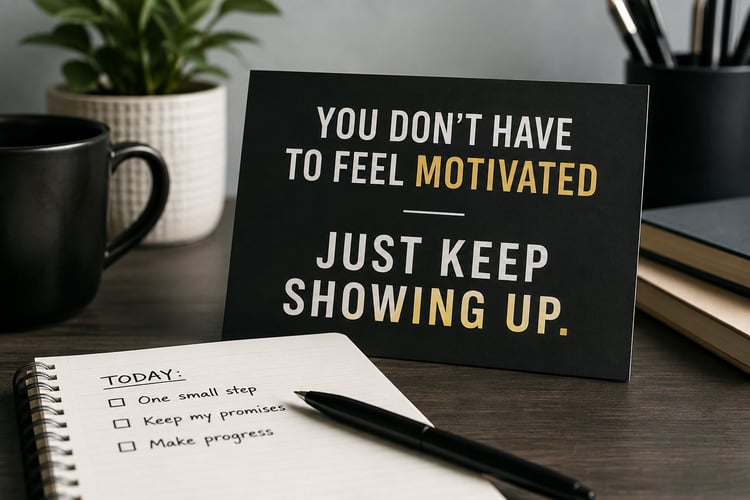
That shift matters because momentum isn’t created exclusively by motivation. Motivation comes and goes, especially when life becomes difficult, but evidence has a way of grounding us when our feelings aren’t cooperating. Every small victory becomes another piece of evidence that says you have done hard things before and can take the next step now. Eventually, you aren’t simply hoping you can make progress; you have a history proving that you already know how.
Find Three Wins Today
The challenge I shared in this episode of The Daily Momentum is incredibly simple: before your day ends, write down three wins. They don’t need to be enormous accomplishments, impressive outcomes, or anything you would necessarily share with another person. They simply need to be three honest reasons you can acknowledge that you moved forward today. The purpose isn’t to manufacture reasons to congratulate yourself; it’s to become more accurate about recognizing the progress that normally goes unnoticed.
Maybe you finished something you’ve been avoiding, or perhaps your victory was finally starting it. Maybe you drank more water, took a ten-minute walk, answered the difficult email, made a healthier decision, spent uninterrupted time with someone you love, or gave yourself permission to rest. Whatever you write down, resist the temptation to immediately minimize it by explaining what you should have done instead. If your victory was a ten-minute walk, let it be a ten-minute walk without immediately criticizing yourself because it wasn’t thirty.
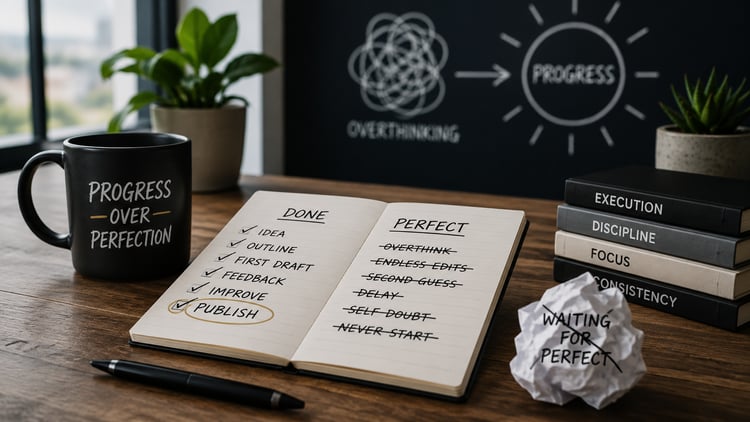
Practicing this consistently begins training your attention in a different direction. Instead of scanning your life exclusively for unfinished tasks, mistakes, and evidence that you’re falling behind, you start becoming better at noticing movement. That doesn’t make you complacent or eliminate your desire to accomplish bigger things. It gives you fuel to continue pursuing those bigger things because progress is much easier to sustain when you can actually see it happening.
One Day, You’ll Realize They Weren’t Small at All
Big victories rarely come from one enormous act of discipline, courage, or determination. They’re usually assembled quietly through hundreds of decisions that seemed relatively ordinary at the time. One morning you got up and tried again, one afternoon you made the difficult phone call, and one evening you decided not to quit even though you were exhausted. Then you repeated some version of those choices again the next day, and eventually all those seemingly insignificant moments became something much larger.
When I look back on some of the hardest seasons of my own life, I understand now that those little victories weren’t distractions from the bigger recovery story. They were the recovery story because each small step made another step possible. There wasn’t one magical moment when everything suddenly became easy again; there were simply enough moments when I kept moving that eventually I could look back and see how far I had come. The progress that once seemed almost invisible became undeniable when viewed over a longer stretch of time.
Whatever you’re working toward right now, don’t make yourself wait until the finish line before acknowledging the work you’re doing. Celebrate the quiet victories, recognize the progress nobody else can see, and give yourself credit for the decisions that are carrying you forward. Keep collecting those small wins, especially during the seasons when the big ones feel impossibly far away. One day, you may look back and realize that the small wins were never really small at all—they were the reason you made it.